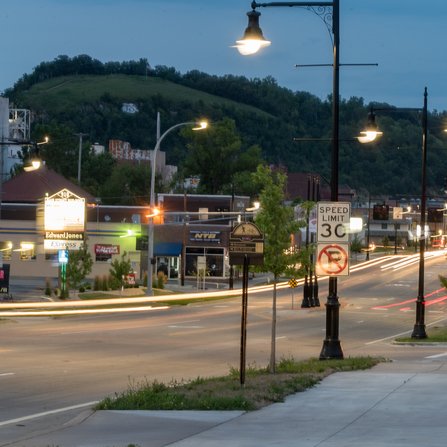
Southview Boulevard (CSAH 14) and 3rd Avenue Improvements, City of South St. Paul and Dakota County, Minnesota
Through 3D video and other tools, proposed changes were communicated and helped stakeholders visualize what
Home / Northwest Metro Mississippi River Crossing Feasibility Analysis Study, MnDOT Metro
This study and additional traffic analysis will allow MnDOT and impacted communities to make an informed decision about a potential future bridge crossing and other transportation investments in the NW Metro.
The Minnesota Department of Transportation (MnDOT) and their partners initiated the Northwest Metro Mississippi River Crossing Feasibility Analysis Study to quantify the need for increased capacity, study a range of improvements on the existing system as well as new alignments, and to understand the impacts created by investment.
Bolton & Menk was a major partner on this effort with another consulting firm. Together, our team compiled previous studies and community plans that identified needs for improved river crossing capacity; analyzed the impact of land use patterns and projected population and employment growth on mobility and access; developed a clear understanding of the travel patterns of existing users at three regional Mississippi River crossings at Highway 101, 169, and 610; quantified the benefits and costs of numerous improvements; developed an understanding of how travel patterns may change within the context of planned and new improvements, including a new river crossing; created and evaluated high level concepts to address operational issues; determined if a new river crossing is both technically and economically feasible; and identified potential next steps.
This completed study allows MnDOT and impacted communities to make an informed decision about a potential future bridge crossing and other transportation investments in the NW Metro.

Through 3D video and other tools, proposed changes were communicated and helped stakeholders visualize what

The primary goal of the study was to increase safety while maintaining corridor mobility.

“Mike, Les, and the rest of the team have been impressive with the advancement of

The plan provides a list of priority projects, programs, policy tools, design guidance, and an