
Albertville WWTF Biosolids Improvements
Home / Albertville WWTF Biosolids Improvements / Albertville WWTF Biosolids Improvements
In an age where sustainability and efficiency are of utmost importance, municipalities are progressively adopting innovative solutions to upgrade critical infrastructure. Wastewater management, frequently overlooked, is crucial in maintaining environmental health and the well-being of communities. Advanced engineering techniques and collaborative efforts can revolutionize a city’s wastewater treatment strategies.
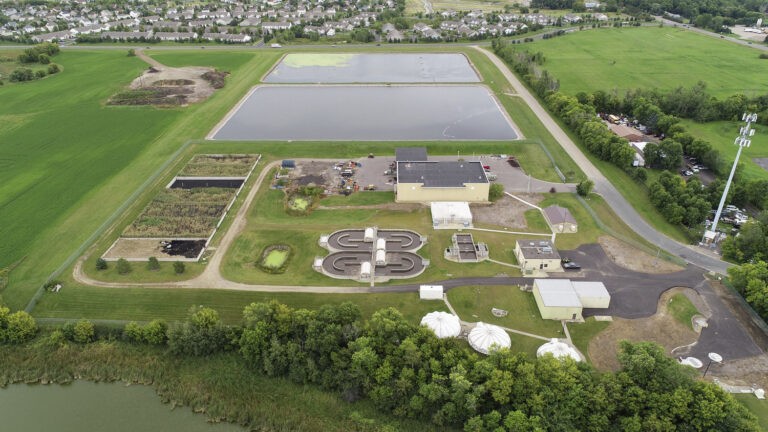
To modernize the city’s wastewater management system, the City of Albertville, MN partnered with Bolton & Menk to complete the preliminary engineering of their Wastewater Treatment Facility Improvements project. The project objective was to install dewatering equipment and infrastructure for the sludge generated at the treatment facility, and replace the aging equipment in the oxidation ditches. Designed in 2022 and bid in 2023, the project is now fully operational, marking a pivotal step in enhancing the city’s wastewater processes.
Transitioning to Sustainable Biosolids Management
Albertville received a letter highlighting the invasive nature of the reeds in the reed beds and their required decommissioning. In response, the city sought a new method to dewater biosolids efficiently while ensuring sustainability. Bolton & Menk took on the task of evaluating biosolids dewatering and thickening technologies. During the initial engineering phase, the team assessed various technologies to align with the city’s goals for current and future biosolids management.
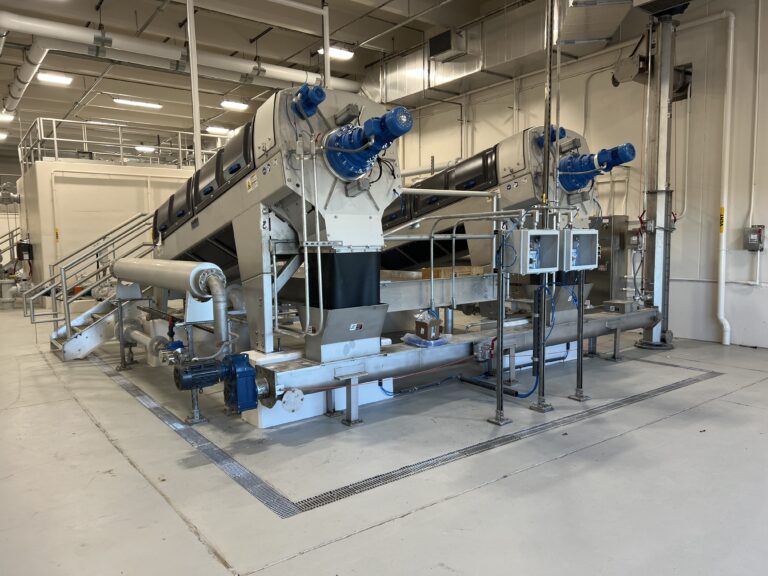
Bolton & Menk coordinated pilot testing of bench scale dewatering screw presses during preliminary engineering and the bench scale pilots showed promising results. The tests showed the screw presses’ ability to achieve dewatering levels of 16 percent to 19 percent dry solids from an influent concentration of about 1.5 percent. These screw presses offered lower motor horsepower requirements compared to centrifuges and aligned seamlessly with the existing building foundation’s piping and layouts. After conducting thorough research and touring facilities with the city, the dewatering screw presses were selected as the optimal technology.
The design ensured the screw presses could handle a broad spectrum of influent parameters. By accommodating future growth, including the potential addition of a third screw press, Bolton & Menk developed a system capable of managing increased sludge production and enhanced nutrient removal rates as the city expands. Balancing influent pump rates and solids concentrations, the team addressed immediate needs while planning for future scalability.
Managing Solids Disposal During Construction
During construction, the team encountered difficulties in managing solids due to the absence of reed beds, which had previously facilitated disposal. Fortunately, the city continues to use the existing wastewater treatment ponds for equalization purposes and excess sludge storage. To address the disposal issue during construction, both solids and water were diverted to these ponds. This strategy effectively managed solids disposal throughout the two-year construction period while the reed beds were demolished and the new building was constructed.
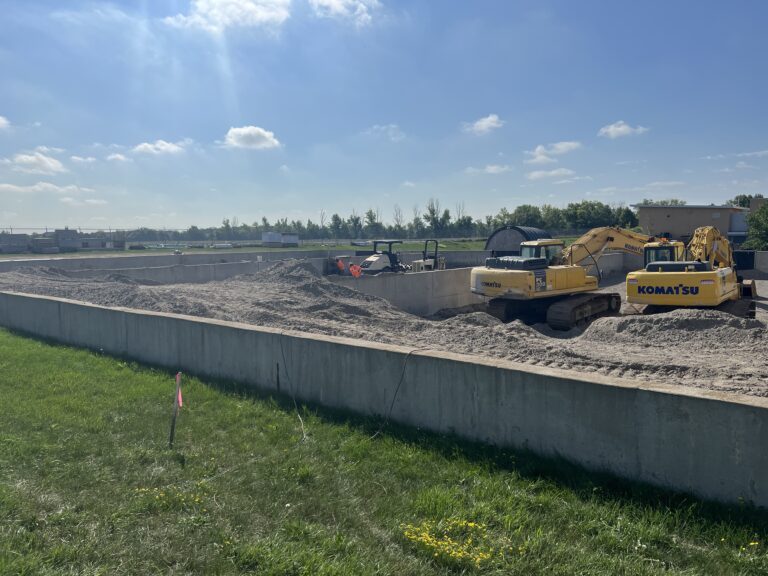
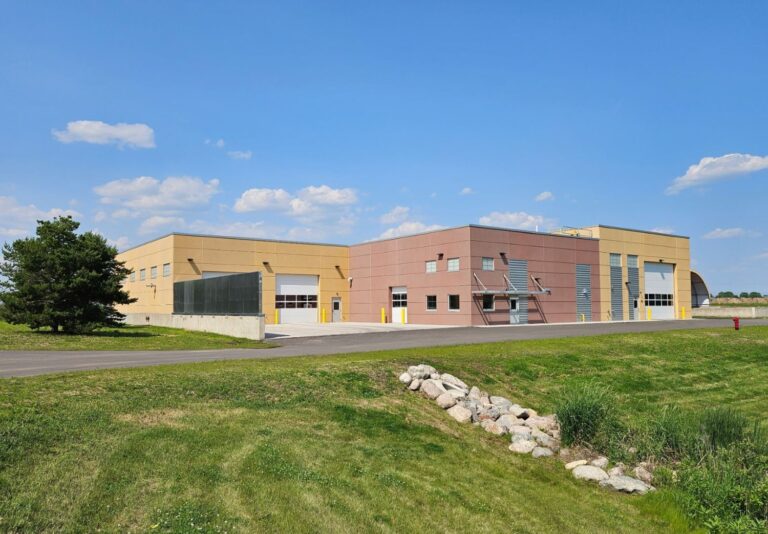
The project entailed decommissioning the existing reed beds and constructing a new biosolids process building and new city garage. The existing structure was found to be in very good condition. The city sought to repurpose the foundation of the reed beds as the basis for the new building. Bolton & Menk and the design team of structural engineers conducted a comprehensive evaluation of the existing foundation, as-builts, and geotechnical data, and determined the foundation could suitably serve as the base for the new building.
In collaboration with Minnesota Pollution Control Agency, a Case Specific Beneficial Re-use Permit was approved, enabling reuse of gravel under the reed beds as fill for other beds not designated for construction. This reduced the need for imported fill materials, cutting aggregate and trucking costs, and minimizing carbon impact. After decommissioning, the material was used to raise other beds, level the ground, and pave areas for outdoor storage, efficiently using resources and minimizing waste.
From Communication to Completion
Clear and effective communication was vital at every project stage. Bolton & Menk worked closely with the City of Albertville to address everything from the facility’s aesthetics to its mechanical processes. Key features, such as compressed air lines for pneumatic tools and the extensive use of 3D modeling software, enhanced understanding and facilitated informed decision-making.
From modernizing screw press technology to repurposing existing infrastructure, the team prioritized efficiency, sustainability, and adaptability. As the City of Albertville continues to grow, this facility is poised to meet the city’s evolving needs while minimizing environmental impact and fostering long-term resilience.
As published in the Minnesota Wastewater Operators Association (MWOA) Summer Issue.
Learn more about our specialized water and wastewater engineering solutions!