
How a Former Kmart Site Sparked Community Revival
Home / How a Former Kmart Site Sparked Community Revival / How a Former Kmart Site Sparked Community Revival
As consultants, we bring a professional commitment to objectivity in our work, seeking to find the best solutions for our clients, regardless of our own background and perspectives. But sometimes, our commitments go deeper, through a personal connection to a place. The former Kmart Site on Lake Street in Minneapolis, Minnesota is one such project.
For decades, the City of Minneapolis sought to reimagine and redirect this site, after their 1970s-era action to close a segment of Nicollet Avenue to place a suburban shopping center. We had the incredible honor of working with city staff to craft the New Nicollet redevelopment framework for the site, setting the path forward for reinvestment and renewal. And as our stories below tell, this was much more than just another project for our team.
Remembering the Past: Haila’s Story
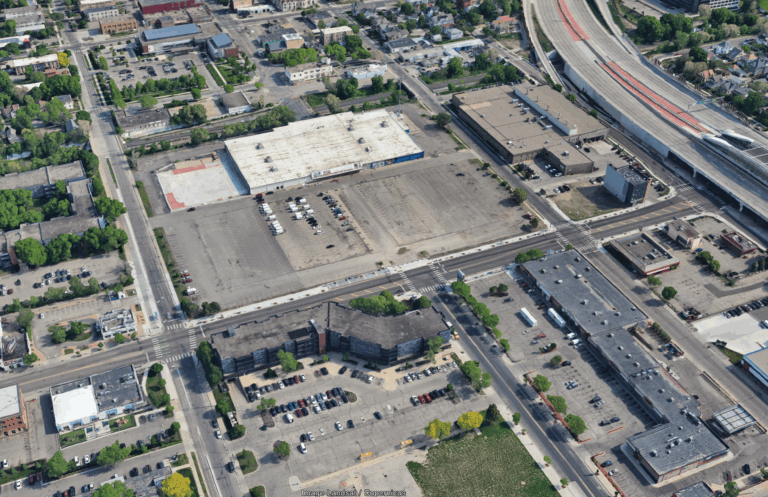
The original Kmart development was envisioned as a vibrant urban village, but budget constraints and shifting real estate conditions led to a car-centric strip mall that severed Nicollet Avenue. Archival research by Principal Community Planning Division Leader Haila Maze reveals how the city’s aspirations were compromised, resulting in a space that failed to meet community needs or urban design principles.
“It seemed like such an odd decision to make, that I had to know why. What would compel the City of Minneapolis to break up their tidy grid with a big, bland, suburban strip mall? What drove decision makers to that place where that seemed like the right decision, though so many have regretted it in the intervening decades?
I’m a researcher by nature, so I went digging through records. It turns out, there were aspirations for something far better in the 1970s. During that era, city planners envisioned a neighborhood scaled urban village to replace old buildings removed. The sketch I found looked charming, inviting, and vibrant – but sadly, it wasn’t to be. The vision stalled out with changing real estate conditions. And when budget challenges came, the city felt compelled to make some tough decisions.
For me, the story of the Kmart site became a deeper lesson about how we must work with communities—not just by painting ideal visions of the future, but by laying out realistic paths to achieve them. That’s why I’ve made it my personal commitment to always balance vision with pragmatism. Throughout this project, I’ve stayed focused on how to move things forward in a way that honors the city’s and residents’ goals without making the plan so complex it becomes unworkable. Every time I pass the site, I’m reminded of the importance of learning from the past, so we don’t repeat its mistakes.”
Life with Kmart: Andrew Remembers
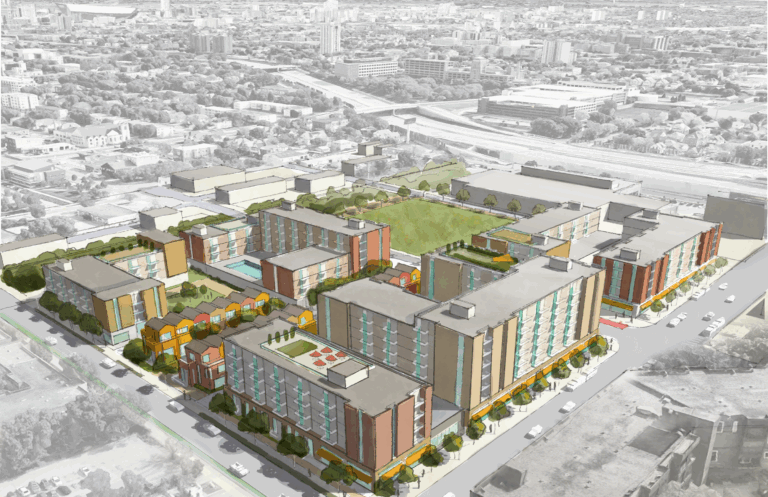
Despite its shortcomings, the Kmart site became a part of daily life for many residents. Senior Urban Designer Andrew Dresdner’s personal narrative illustrates how the space was used for shopping, commuting, and even civic engagement during times of unrest.
“My neighbors in southwest Minneapolis often speak about the infamous Kmart site with scorn and derision – as if it plays no role in our lives other than being the punchline of a joke. However, as I think over the nearly 20 years I have lived nearby, I am reminded of the many ways in which the Kmart site has contributed to my life – both positive and negative.
In 2002, I furnished my first home—a duplex—with Martha Stewart curtains from Kmart, drawn by its affordability. Years later, while working on the Uptown Small Area Plan, I vividly remember a 2008 meeting with then-mayor RT Rybak, who remarked that while Uptown was exciting, he was most eager about the big plans for the Kmart site.
By the mid-2010s, my kids and I had made the taco truck at Lake and Blaisdell a regular stop. In 2022, I unexpectedly reconnected with an old boss while the Kmart building temporarily served as a post office, sharing updates and speculating about the site’s future. And in the wake of George Floyd’s murder, my children and I joined our neighbors in sweeping up broken glass and helping local businesses recover—an experience that deeply shaped our understanding of civic responsibility and community resilience.”
Envisioning a Better Future: Peter’s Perspective
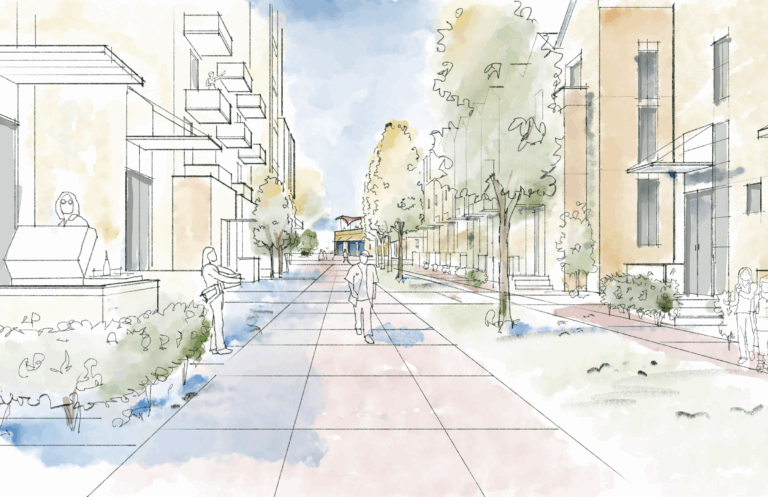
The New Nicollet redevelopment framework aims to reconnect the street grid, reinvest in the community, and restore the site as a natural part of the city’s fabric. Senior Urban Designer Peter Crandall’s reflections highlight how the site, once seen as a planning failure, is now a model for reintegration.
“I’ve spent most of my adult professional career fantasizing about what could replace the big box behemoth that so many south Minneapolitans despised. Maybe a giant park? Maybe a futurist housing development? In my architecture school days, the Kmart site was a frequent topic of student inquiry, testing the creative capacities of designers to right historic wrongs.
After years of dreaming about a potential Shangri-la in South Minneapolis, it became clear that what the site needed was just to be a part of the city’s fabric again. A place, like any other in a city with diverse people and diverse needs; a neighborhood, a place to call home, a place to move through, a place to stop and rest. In my own view, success will be measured by how soon the Kmart site is forgotten, buried under the foundations of new life and new stories.”
Looking Ahead: A Blueprint for Community Revival
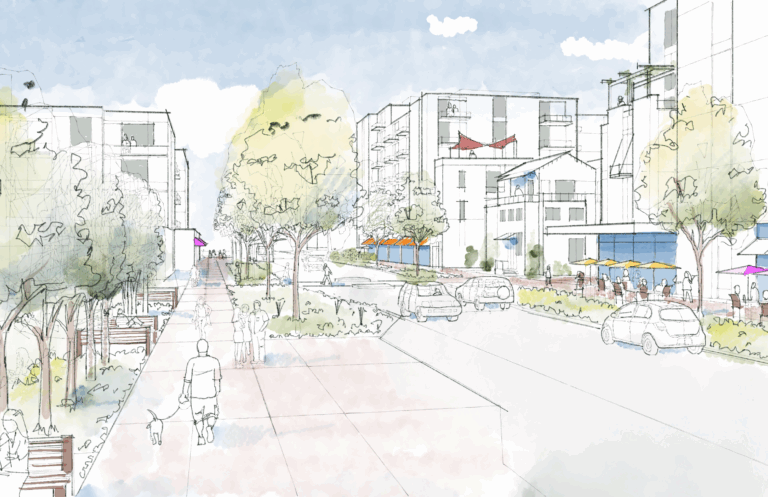
The New Nicollet project offers valuable lessons for other cities grappling with the legacy of past planning decisions. By committing to learning, listening, and doing better, planners and communities can transform past mistakes into opportunities for meaningful, lasting change.

As a community planning division leader at Bolton & Menk, Haila is committed to advancing the long-term success of communities through planning and project management services. She draws on her experience in local and regional planning to connect with clients, helping them identify what they need and how to accomplish it. She began her planning career in 1998 and has extensive experience with land use and transportation planning, creative and inclusive engagement, and supporting work in health assessment, scenario planning and modeling, and implementation planning. Known for thorough studies, it’s not surprising Haila is fascinated with genealogical research and has traced her family history back to the 1600s.
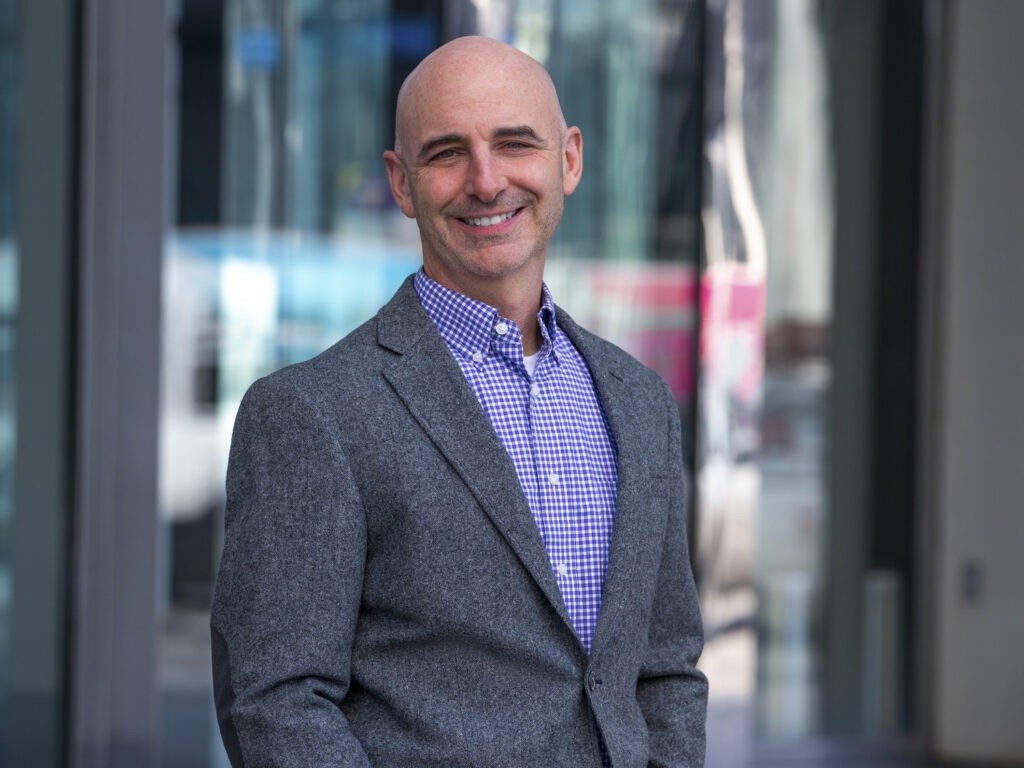
Andrew is a senior urban designer at Bolton & Menk whose professional career began in 1998. His expertise spans urban design, redevelopment planning, community development, public space design, and placemaking. Andrew appreciates the interdisciplinary approach to project solutions that Bolton & Menk uses, as well as the willingness to bring innovation to all projects.
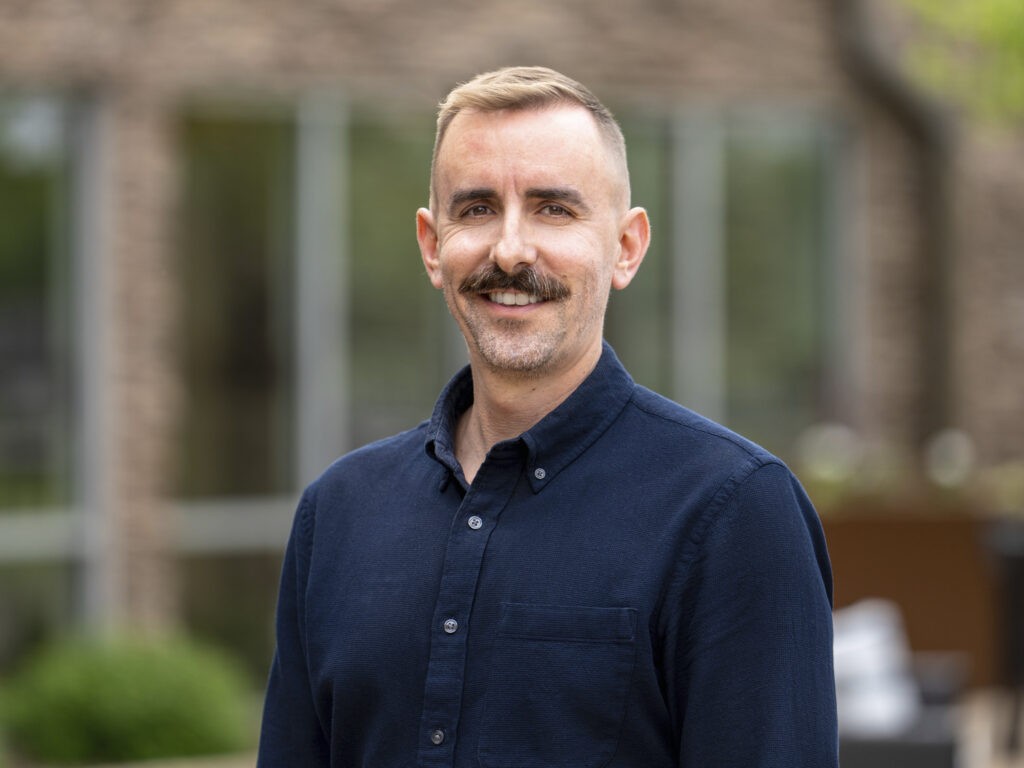
A senior urban designer on the Bolton & Menk team, Peter began his career in 2009. He provides design expertise, visual communication assistance, and general support for our planning and urban design work group. His background in architecture, planning, and urban design with an emphasis on transit-oriented development, public realm design, small area planning, and municipal code development make him an expert and a great addition to any team. Peter’s drive stems from his love of creating spaces that help communities grow.