
Foaming Out Forever Chemicals: Willmar’s PFAS Pilot Story
Home / Foaming Out Forever Chemicals: Willmar’s PFAS Pilot Story / Foaming Out Forever Chemicals: Willmar’s PFAS Pilot Story
Per‑ and polyfluoroalkyl substances, commonly known as PFAS or forever chemicals, have emerged as a growing challenge for wastewater utilities and communities across Minnesota. A commonsense approach, coupled with new treatment technologies, proves to be a good future solution for communities and leachate haulers to consider.
PFAS are designed for durability, these man‑made compounds resist breakdown through conventional wastewater treatment processes and can pass through systems into the effluent and biosolids. Their persistence is rooted in chemistry. The carbon-fluorine bond is one of the strongest known, meaning PFAS does not rot, rust, or degrade over time. Once released into the environment or absorbed by the human body, these compounds can remain for decades. In Minnesota, the Minnesota Pollution Control Agency (MPCA) has identified PFAS in 98% of the state’s closed landfills, underscoring how widespread the issue has become and why proactive management is increasingly critical.
Where PFAS Comes From
PFAS is often assumed to be primarily an industrial issue, but it is just as commonly introduced through everyday products. Non-stick cookware, waterproof clothing, food packaging, cosmetics, and some types of dental floss all contain PFAS. As these products are washed, disposed of, or wear down over time, PFAS enters household drains and trash systems and ultimately makes its way to landfills and wastewater treatment facilities.
This creates a continuous cycle in which PFAS moves from homes into waste streams and concentrates at facilities designed to manage society’s waste. Wastewater treatment plants and landfills become receivers in this process. Traditional treatment systems are designed to remove organic matter and bacteria, not highly durable compounds like PFAS, allowing these chemicals to pass through treatment processes largely unchanged. This challenge is especially significant for facilities that accept landfill leachate, where PFAS concentrations can be elevated and difficult to manage. While leachate treatment at wastewater treatment plants makes sense for providing a safe and reliable process to break down many typical wastewater constituents, the PFAS are not removed.
Landfill Leachate and Biosolids Management
The Willmar Wastewater Treatment Plant (WWTP) is a conventional activated sludge facility with extended air oxidation ditches and no digesters. The plant has a design capacity of 7.51 million gallons per day, with typical influent flows ranging from 3 to 5 million gallons per day. Like many larger facilities, Willmar accepts hauled waste, including landfill leachate.
The plant currently receives leachate from five landfills on a regular basis and serves as a backup facility for four additional landfills across the region. Over the past five years, annual leachate volumes have averaged approximately 3.3 million gallons. Consistent monitoring has shown that landfill leachate contains elevated PFAS concentrations, making it a significant contributor to the facility’s overall PFAS loading.
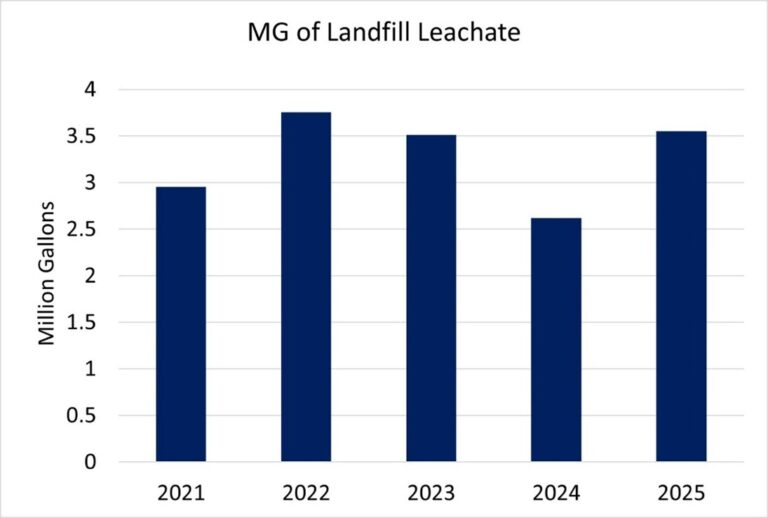
For the City of Willmar, protecting the integrity of its biosolids program is a priority as well as their final effluent to Hawk Creek, a contributor to the Minnesota River. Since PFAS can collect in the biosolids, this has been the focus of guidance and regulations from the MPCA. The city land-applies biosolids and wants to ensure that practice can continue safely and responsibly as PFAS regulations evolve. Addressing PFAS once it enters the treatment process would be costly and inefficient, so the city began looking for a smarter approach. The goal was to manage PFAS at the front end of the system, before it could accumulate in solids or pass into the environment through the effluent.
That need led the City of Willmar to pursue a pilot study for the PFAS containing leachate.
A Planning Focused, Grant Funded Approach
Through the MPCA PFAS Reduction Grant Program – Planning & Design for Solid Waste/Wastewater, the City of Willmar partnered with Bolton & Menk to evaluate treatment technologies that could reduce PFAS loading through targeted, upstream treatment. Rather than committing immediately to full-scale infrastructure, the grant allowed them to test real-world performance through pilot testing and gather site-specific data.
The primary objectives of the pilot were to evaluate PFAS removal from landfill leachate using foam fractionation, assess the system’s robustness across leachate from multiple landfills, explore scalability from pilot to full-scale implementation, and evaluate the potential for PFAS destruction following removal.
Bolton & Menk worked closely with city staff throughout planning and implementation, supporting technology selection, vendor coordination, and integration of the pilot into existing operations. The team focused on identifying a solution that did more than concentrate PFAS, placing equal importance on understanding how removed PFAS could ultimately be destroyed.
Why Foam Fractionation?
Foam fractionation is a promising option for PFAS treatment because many PFAS compounds readily attach to air–water interfaces. The process takes advantage of the surface-active nature of many PFAS compounds. By introducing air into the leachate, PFAS preferentially attaches to air bubbles and rises into a foam that can be collected and removed. The technology offers a relatively small footprint and the flexibility needed to handle variable leachate flows and chemistry. It is also relatively simple technology similar to Dissolve Air Flotation which has been used in wastewater for more than 50 years.
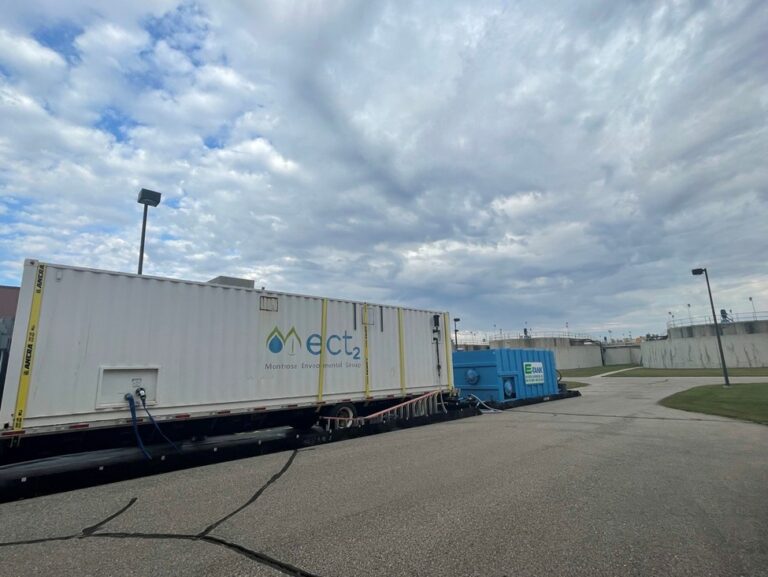
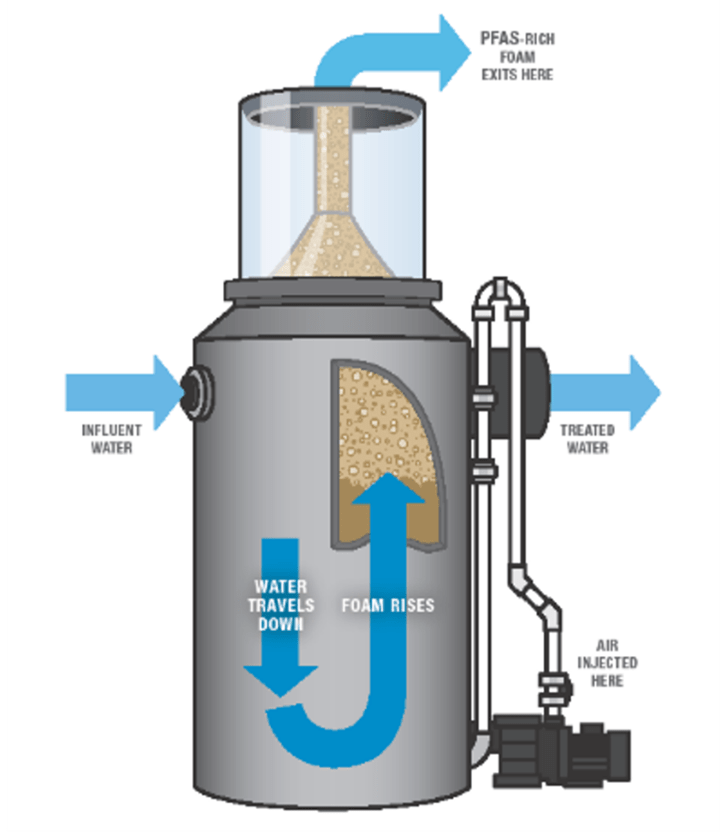
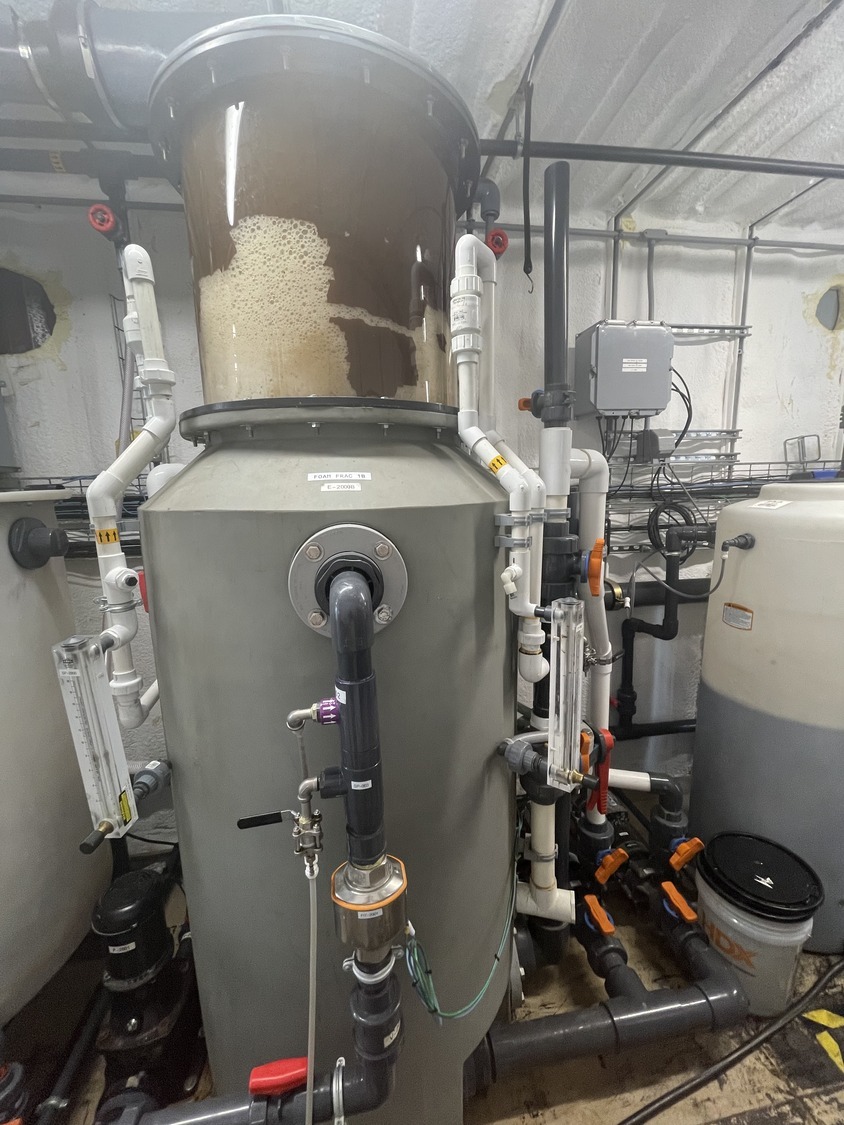
Foam Fractionator
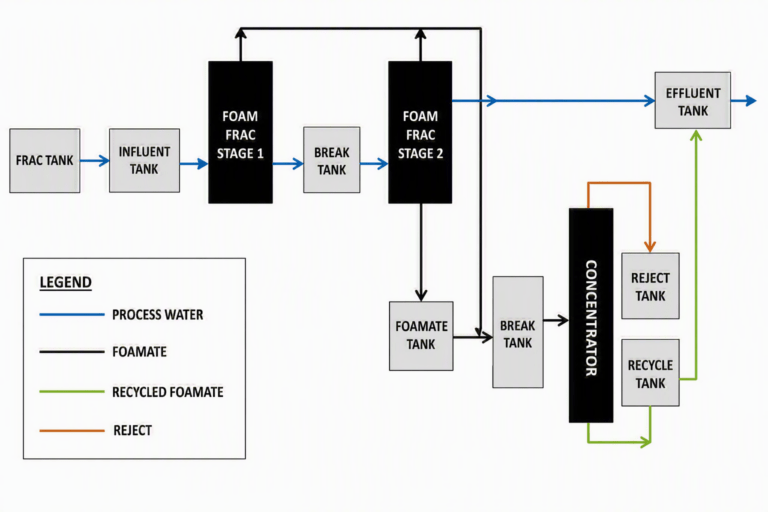
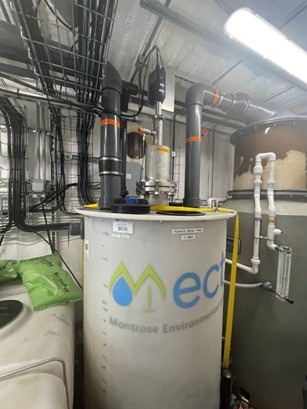
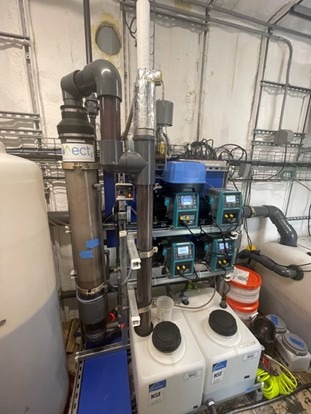
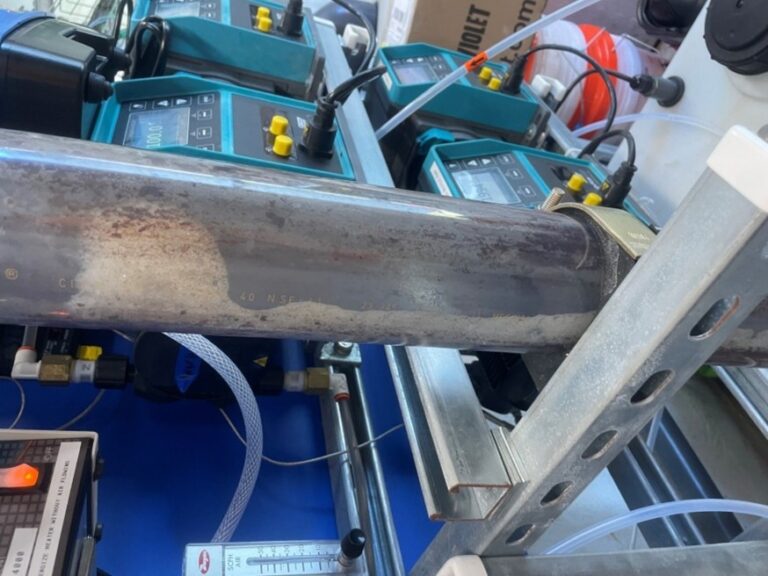
Foam Collection
Pilot Testing at the Willmar WWTP
Pilot testing was conducted on site using landfill leachate from multiple landfill sources to reflect the range of PFAS concentrations and water quality conditions the plant encounters in day-to-day operations. Throughout the pilot, city staff and the project team worked side by side, monitoring foam production, observing system performance, and collecting samples for laboratory analysis to evaluate PFAS removal.
The pilot operated over a 3-week period, treating approximately 13,000 gallons of leachate from 3 landfills across 16 individual trial runs. Laboratory results confirmed that foam fractionation was effective at removing several PFAS compounds commonly found in landfill leachate, providing the city with valuable, site-specific data to inform next steps.
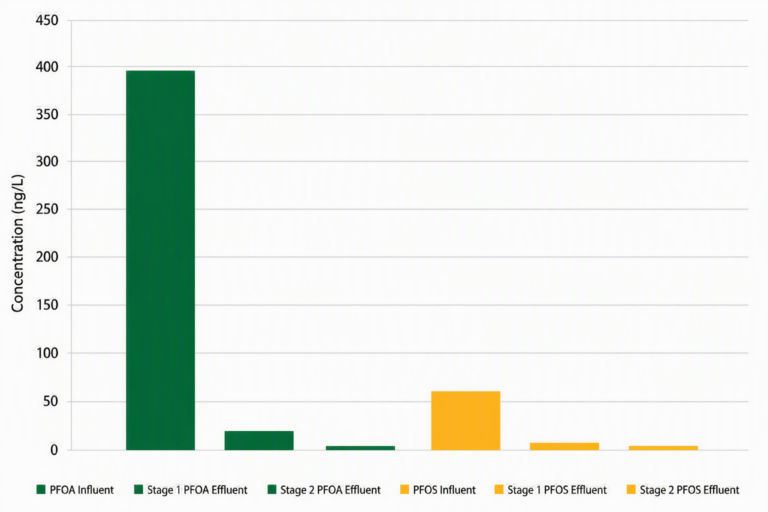
Foaming out PFAS, Then Ending it for Good
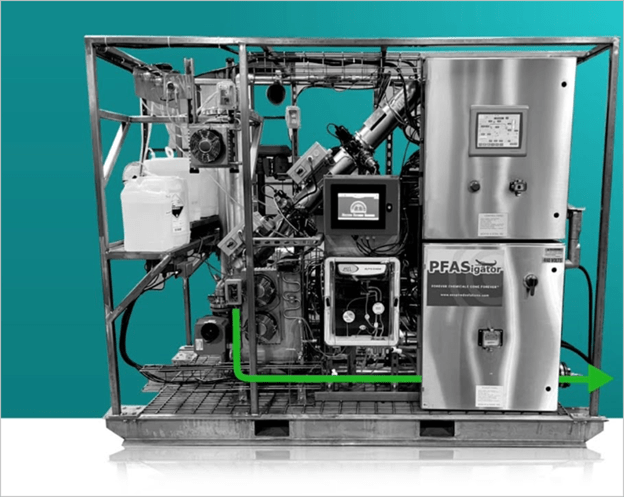
What set the Willmar pilot apart was its focus on removing PFAS and confirming those compounds were ultimately destroyed. To achieve this, the concentrated foam generated through fractionation was treated using PFASigator, a PFAS destruction technology designed to break down these persistent compounds. By pairing PFAS removal with destruction, the project ensured that forever chemicals were not simply transferred elsewhere, but instead permanently eliminated.
A Meaningful Outcome
The success of the Willmar PFAS pilot is rooted in strong partnerships and a shared commitment to protecting the environment. By working closely with City of Willmar staff and the MPCA throughout the project, the Bolton & Menk team provided practical guidance and supported the selection of a solution that aligned with facility needs, operational realities, and long-term goals. With proper funding and a solid business plan, the treatment of leachate by communities can be beneficial for the landfills, environment, and community residents.
As communities across the Midwest continue to navigate the challenges of forever chemicals, one key takeaway is clear: addressing PFAS does not require waiting for perfect answers. With thoughtful planning, testing, and partnerships, communities can take informed and responsible action today to improve the environment and offer a realistic, economical approach to landfill leachate treatment.
As published in the Summer 2026, Volume 76 issue of The Wastewatcher. Contact our water & wastewater engineering professionals to start building your community’s plan.
Angie Saffert is a water/wastewater practice expert who joined Bolton & Menk in 2011. She is responsible for the design of wastewater treatment facilities, facility plans for wastewater treatment, and NPDES permitting. Angie has also conducted PFAS treatment viability assessments and has been on the forefront of PFAS permitting and regulations. Angie is dedicated to leaving the environment in a better state for her children.
Nick Gans is a water/wastewater project engineer at Bolton & Menk whose professional career began in 2021. His expertise lies in water and wastewater treatment and his responsibilities include design, report writing, construction observation, and communicating with project team members. Nick’s passion for the field stems from his desire to help communities thrive by providing sustainable, environmentally friendly solutions.