PFAS in Water and Wastewater: What You Need to Know
Home / PFAS in Water and Wastewater: What You Need to Know / PFAS in Water and Wastewater: What You Need to Know
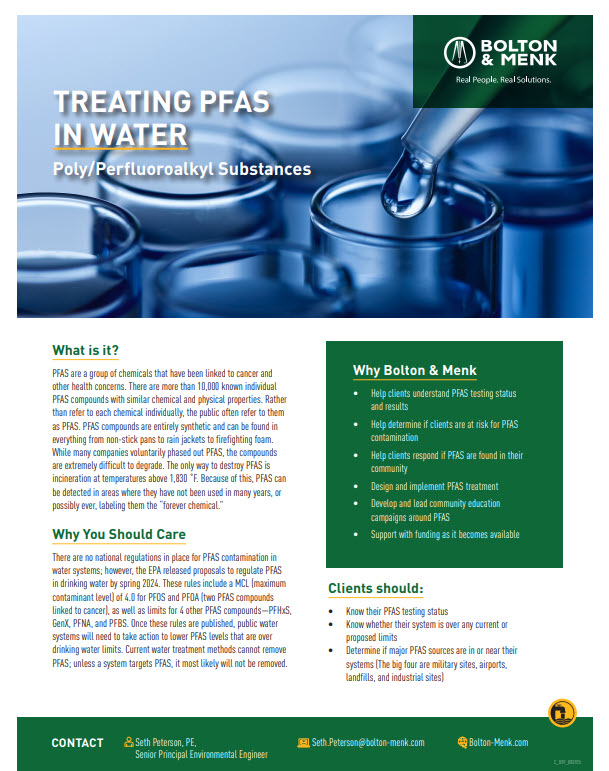
Per- and polyfluoroalkyl substances (PFAS) are a large group of synthetic chemicals—over 10,000 known compounds—that share similar chemical and physical properties. Linked to cancer and other serious health concerns, PFAS are commonly found in everyday items such as non-stick cookware, waterproof clothing, and firefighting foam.
Despite voluntary phase-outs by many manufacturers, PFAS are extremely resistant to degradation. The only known method to destroy them is incineration at temperatures exceeding 1,830°F. As a result, PFAS persist in the environment for decades, earning them the nickname “forever chemicals.”
Currently, there are no enforceable national regulations for PFAS in water or wastewater systems. However, the US Environmental Protection Agency has proposed drinking water standards that include a maximum contaminant level (MCL) of 4.0 parts per trillion for PFOS and PFOA—two PFAS compounds most strongly associated with cancer. Once finalized, these rules will require public water systems to reduce PFAS levels that exceed the new thresholds.
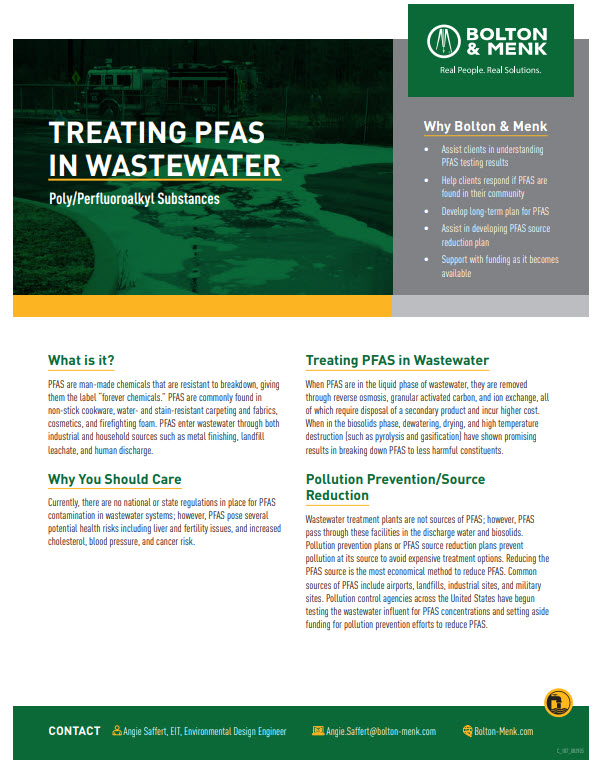
While wastewater treatment plants are not sources of PFAS production, they act as conduits for its transmission. Consequently, pollution prevention and source reduction remain critical strategies. Addressing primary sources such as airports, industrial facilities, and landfills is considered the most cost-effective approach. Numerous agencies now allocate resources to monitor and mitigate PFAS at these entry points.
We assist communities with interpreting PFAS test data, developing response protocols, and creating long-term plans for mitigation and source reduction tailored to local requirements.
If you’re concerned about PFAS in your water or wastewater systems, don’t wait. Contact our water & wastewater engineering professionals to start building your community’s plan.