How Creative Funding Helped Reconstruct the Aitkin Runway
Home / How Creative Funding Helped Reconstruct the Aitkin Runway / How Creative Funding Helped Reconstruct the Aitkin Runway
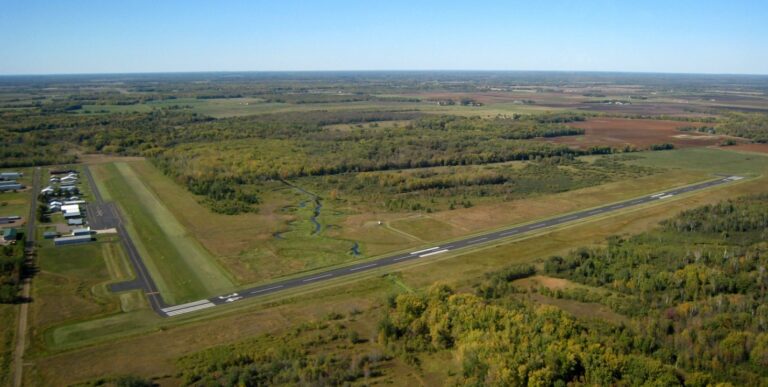
For communities like Aitkin, Minnesota, the municipal airport is more than infrastructure. It supports local businesses, connects residents, and serves as a quiet but essential part of daily life.
So when Runway 16/34 at Aitkin Municipal Airport reached the end of its useful life, the need was clear. The runway had to be reconstructed to preserve safety, reliability, and long-term service for the community.
What was less clear was how the project would be funded.
A Project That Didn’t Pencil Out
Like many airport projects, reconstruction at Aitkin depended on a combination of federal and state funding. To qualify, the airport first completed a planning study required by the Federal Aviation Administration (FAA) to determine what portions of the runway were eligible for federal support.
The results were a major setback.
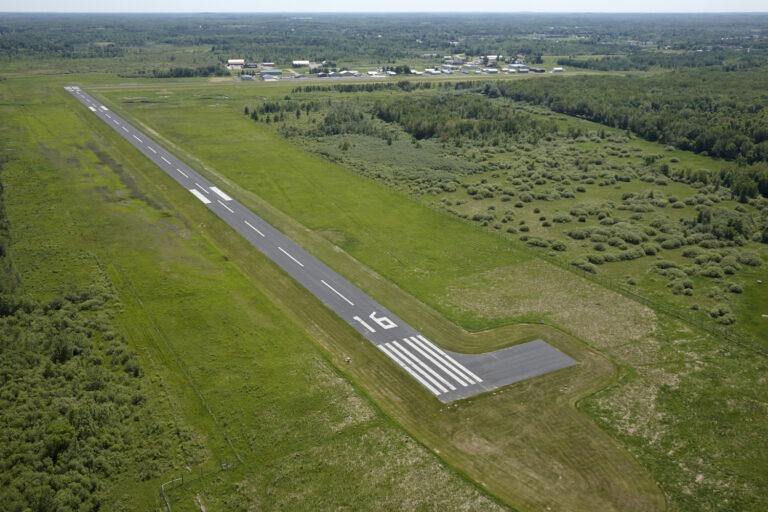
Based on the frequency of specific larger flight operations at the airport, the FAA determined that only 3,400 feet by 60 feet of the runway met eligibility requirements. Additionally, the project would require two taxiway turnarounds to be constructed on the north and south ends of the runway in place of the existing holding areas at each end.
That left a large portion of the existing 4,000-foot by 75-foot runway outside of federal funding.
For the City of Aitkin, that gap created a serious problem.
“Even with federal and state funding, the remaining local share of the runway project was beyond what the Aitkin Airport could reasonably absorb, creating a significant barrier to moving the project forward initially,” said City Administrator Jen Thompson.
Refusing to Scale Back
From the start, the City of Aitkin was committed to maintaining its existing runway length to continue supporting local business and future growth.
Scaling the project back to meet funding limitations would have reduced the airport’s long-term value to the community and limited future expansion for the current fixed base operator on the airfield.
Instead of compromising the vision, the focus shifted to finding a better funding strategy.
Bolton & Menk worked closely with the city to evaluate every available option, looking beyond traditional funding pathways to close the gap and keep the project moving.
Finding a Path to Full Funding
The solution did not come from a single source. It came from a layered funding strategy led by Bolton & Menk and built in close partnership with the city, bringing together federal, state, and regional support.
First, Bolton & Menk secured FAA discretionary funding for the federally eligible portions of the runway, maximizing the federal investment at 95% for those areas.
Next, the team pursued additional state funding to help cover the portions that fell outside federal eligibility. Without the supplemental state grant, the city would have been responsible for an estimated 70% local share of those costs.
But even with those sources, a gap remained.
City staff and Bolton & Menk identified, drafted, and secured an additional funding opportunity through the Iron Range Resources & Rehabilitation Board. That final piece closed the remaining gap and eliminated the local share.
“Our Airport Engineer, Nick Grahek, stepped back and developed a creative funding strategy that was key to making this project possible,” said City Administrator Jen Thompson. “By strategically breaking down the project, Nick maximized available state and federal funding, helping the airport stretch limited local resources and turn a challenging project into a successful reality.”
Together, these efforts transformed a project that once seemed financially out of reach into one that was fully funded and ready to move forward, demonstrating how Bolton & Menk helped turn a complex funding challenge into a practical path forward for the community.
“It is great to work with airports that are so committed to maintaining their infrastructure and doing what is best for their community,” said Aviation Project Manager Nick Grahek. “From day one, this group stayed committed to supporting the airport and gave Bolton & Menk, the city, and the Aitkin Airport Commission the opportunity to deliver a strong outcome for the airport and its users.”
Keeping the Airport Open
With funding secured, attention turned to construction.
For Aitkin, success was not just about rebuilding the runway. It was also about keeping the airport operational throughout the project.
A full closure would have disrupted local and traveling users for a substantial portion of the summer flying season, while also reducing operations and fuel revenue, all of which the city wanted to avoid.
To make that possible, Bolton & Menk developed a phased construction approach that allowed work to proceed while maintaining an active runway.
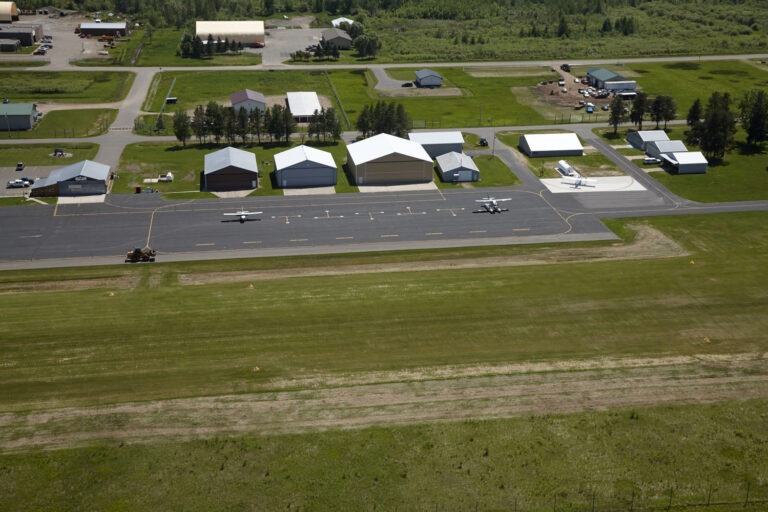
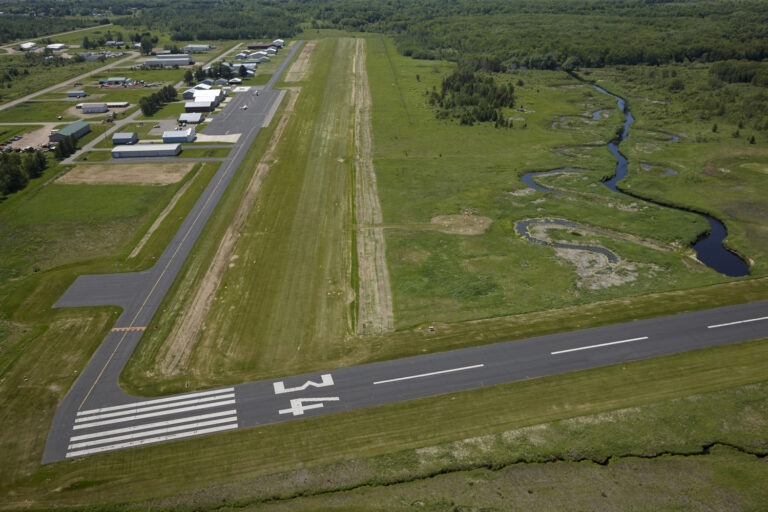
By shifting the turf Runway 26 threshold by 351 feet, the team created the space needed to place the Runway Object Free Area outside the construction limits, allowing construction to continue while keeping a runway available for use.
A Long-Term Investment in the Community
Today, Aitkin Municipal Airport is better positioned to serve its community for years to come.
The reconstructed runway improves airfield safety, supports continued economic activity, and reinforces the airport’s role as a key regional asset.
Just as importantly, the project shows what is possible when funding challenges are approached differently.
What This Means for Communities
For many communities, the biggest barrier to infrastructure improvements is not identifying the need. It is finding a way to pay for it.
At Aitkin Municipal Airport, the initial answer from traditional funding sources was not enough to move forward.
But by taking a broader view, identifying creative funding opportunities, and building a strategy aligned with the community’s goals, the project became achievable.
This approach did more than fund a runway. It preserved a resource that supports local businesses, keeps the community connected, and positions Aitkin for continued growth.
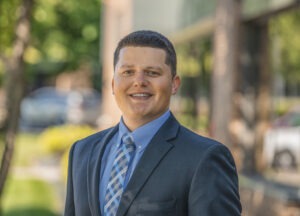
Nick is an aviation project manager who began his career in 2018. He grew up with a passion for aviation and considers himself lucky to be able to work with local airport patrons and remain involved in the aviation community. Nick has experience working with several airports on various projects to serve their needs. His experience as a student pilot, airport designer, inspector, and project manager gives him a background in various types of projects from conception to closeout. Examples include pavement construction, pavement reconstruction, pavement maintenance, hangar construction, snow removal equipment (SRE) acquisition, SRE buildings, and AWOS construction/relocation. He has worked closely with FAA personnel throughout his career and has a strong understanding of funding eligibility and requirements.