

CSAH 32 Reconstruction, Dakota County, Minnesota
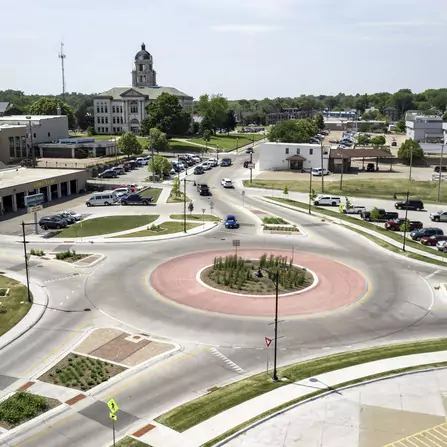
This complex reconstruction project converted a vehicle-centric, two-lane undivided corridor to a two-lane divided typical
Home / TH 41 Expansion, Carver County, Minnesota
Our team used design flexibility to minimize impacts while still providing full roadway functionality.
TH 41 through Chaska is one of the most congested corridors in Carver County carrying traffic to medical destinations, commercial centers, an industrial park, and residential neighborhoods. Carver County applied for and secured federal funding to lead an expansion of TH 41 from Hundertmark Road to north of CSAH 14/Pioneer Trail. Expanding the highway from two- to four-lane divided required a significant engineering effort as the current alignment was woven between homes and Lake Grace on the west and a ravine/drainage area on the east.
Using technical expertise and knowledge in design flexibility, multiple right-sized alternatives were developed. Roadway alignments and profiles were developed to best tie into natural terrain barriers and other utility and private property constraints. Additionally, the environmental documentation process included an in-depth noise analysis and public involvement. This process culminated in a vote to install a noise wall on the west side of the project.
We led the county, city, MnDOT, other project partners, and the public through the preliminary design process to arrive at a consensus-based solution. Using design flexibility, impacts were minimized while still providing full roadway functionality. This process successfully developed a cost-conscious approach for which the county hired Bolton & Menk to design.

This complex reconstruction project converted a vehicle-centric, two-lane undivided corridor to a two-lane divided typical

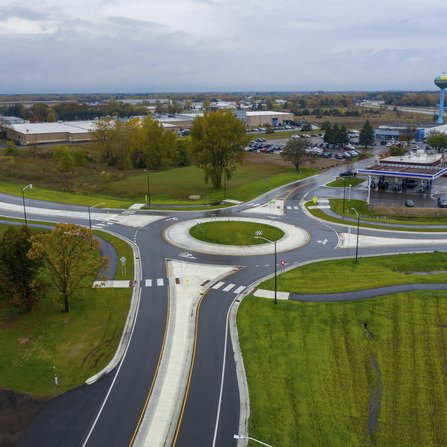
The TH 24 and Hemlock Intersection Improvements project solved a decade-long problem and facilitated an

The roundabout is ideal at a school entrance where signals aren’t needed most times throughout

Bolton & Menk worked with MnDOT and stakeholders to identify passing lane locations to limit